What Seems Obvious to a Parent Is Not Always Obvious to a Child
Mamoul
This week, I told our 15-year-old son that I felt he was still not contributing enough to life at home.
He replied:
“I don’t understand. I did everything you asked me to do.”
His answer made me pause. To him, contributing meant completing the tasks we had given him. To me, it also meant noticing certain things and taking action without waiting to be asked.
This difference may seem simple, but it can create a great deal of misunderstanding.
Start by Explaining What Is Expected
“Contribute more,” “tidy up a little,” or “help around the house” are very general requests.
Before expecting a child to notice for themselves what needs to be done, we can start by clarifying:
which task needs to be completed;
why it needs to be done;
when it should be completed;
whether they can choose when to do it;
whether they need help.
With time and experience, some tasks may become more obvious to them.
Avoid “Right Here, Right Now”
Household tasks are rarely a teenager’s top priority. That does not mean they should not contribute.
Like adults, teenagers generally prefer to be given advance notice rather than being told at the last minute that they must stop what they are doing because now happens to be the most convenient time for the parent.
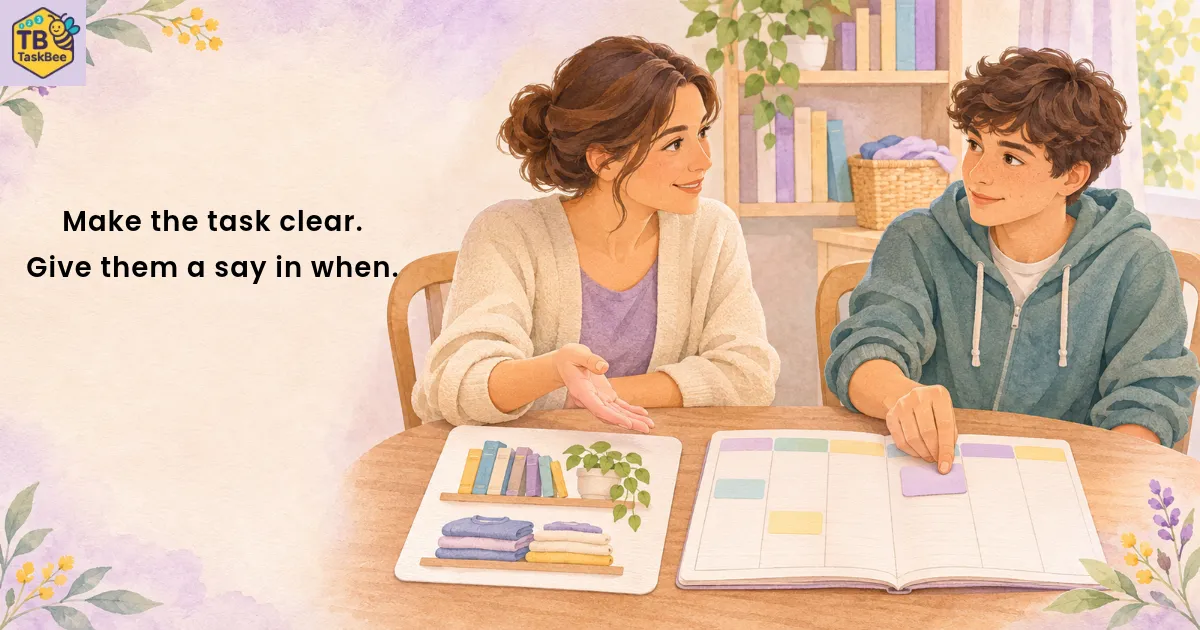
We can set a clear boundary while still leaving some room for choice:
“Your bedroom needs to be tidy by Sunday evening. When do you think you can do it?”
The task is not optional, but the teenager has some control over how they organise their time.
Giving advance notice, explaining clearly and allowing a child to choose a realistic time does not remove responsibility. It helps them gradually take ownership of it—with fewer reminders and less tension.